
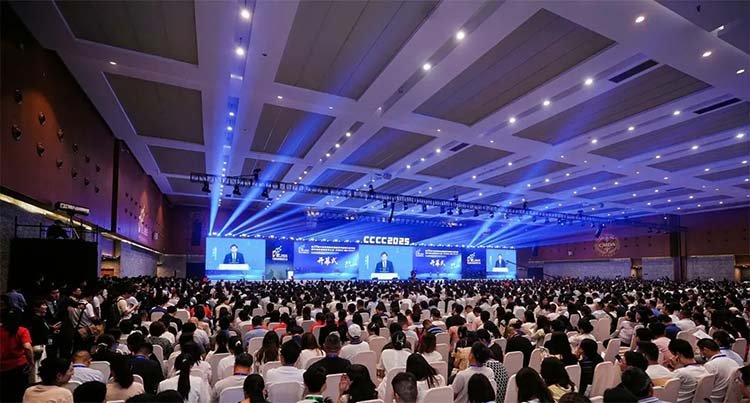
Recently, the "16th Annual Conference of the Critical Care Medicine Physicians Branch of the Chinese Medical Doctor Association & 2025 China Critical Care Medicine Congress"—hosted by the Chinese Medical Doctor Association and its Critical Care Medicine Physicians Branch—was held in Nanjing. With the theme "Life: Everyone is the Protagonist," the conference gathered numerous authoritative experts in the field of critical care to conduct in-depth analysis and wonderful sharing around cutting-edge disciplinary topics and hot issues.
In the opening speech of the special session on "Early Warning Models for Critically Ill Patients," Professor Song Xuan from Shandong Provincial Public Health Clinical Center delivered a report titled "Early Warning Scores for Critically Ill Patients." She pointed out: "There are no sudden changes in a patient’s condition—only sudden discoveries of changes that have already occurred," emphasizing that early detection is crucial for improving the prognosis of critically ill patients. The rapid advancement of digital and intelligent technologies has driven early warning scores from the traditional stage to the artificial intelligence (AI) era, which will also become an important research direction in critical care.
In subsequent speeches, Professor Wu Jianfeng from the First Affiliated Hospital of Sun Yat-sen University, Professor Lan Yunping from Sichuan Provincial People’s Hospital, and Professor Cai Hongliu from the First Affiliated Hospital of Zhejiang University School of Medicine shared phased achievements in the development and application of early detection systems for disease deterioration based on their respective research and practices.
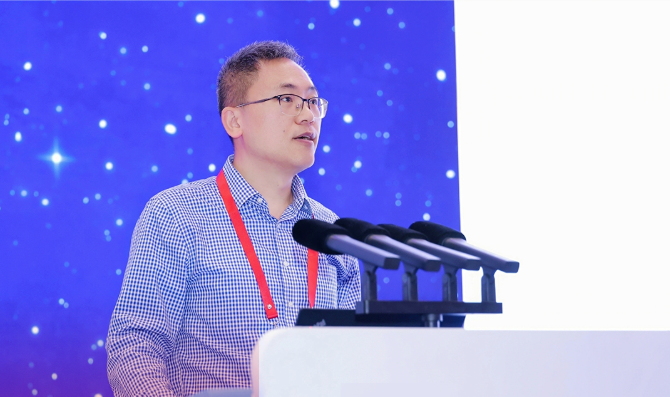
Professor Wu Jianfeng
The First Affiliated Hospital of Sun Yat sen University
As the ward most suitable for digital transformation in hospitals, the Intensive Care Unit (ICU) is facing practical challenges such as complex conditions, an aging patient population, and massive data volumes—and AI technology is the key force to address these challenges.
Among numerous application directions, early detection of disease deterioration has attracted the most attention. However, most existing detection systems have obvious limitations, such as coarse time granularity, lack of clinical expert labels, over-reliance on correlation rather than causal analysis, and insufficient data or overfitting.
"We collaborated with Mindray and computer experts to develop the EIA algorithm by deeply integrating clinical expert knowledge with AI, based on high-precision, second-level continuous vital sign data and an 'expert-enhanced' machine learning approach. Verified by our in-house database and the MIMIC III database, the EIA algorithm is significantly superior to existing clinical assessment methods in early detection accuracy, demonstrating excellent performance in identifying deterioration," Professor Wu Jianfeng introduced in his special report "Vital Sign-Based Early Detection System for Disease Deterioration."
In the future, the two teams will continue to optimize the system based on the clinical practice of monitors to further enhance its detection capability and applicability.

Professor Lan Yunping
Sichuan Provincial People's Hospital
Atrial fibrillation (AF) has an extremely high incidence in critically ill patients. However, since AF may not be accompanied by an immediate drop in blood pressure in the early stage, it is prone to delayed clinical treatment and thus becomes a "silent killer."
"Data analysis of patients shows that the early mortality rate of AF patients (pre-existing or new-onset) with circulatory instability is higher than that of patients with stable circulation. Based on this finding, we optimized the special algorithm for electrocardiographic abnormalities within the EIA algorithm framework using a database of hemodynamically unstable AF patients, significantly improving its sensitivity in early detection of AF deterioration trends," Professor Lan Yunping shared in her special report "Clinical Application of the Early Detection System for Disease Deterioration." "Review of real cases shows that the EIA can timely identify new-onset AF and simultaneously analyze abnormal changes in hemodynamic instability parameters when AF occurs, gaining valuable time for clinical intervention and improving the treatment prognosis of critically ill patients."
Currently, preliminary results from small-sample prospective trials collected clinically show that the EIA achieves a clinical intervention rate of over 90% for new-onset AF with hemodynamic instability and 71% for pre-existing AF with hemodynamic instability. Further research and optimization will be conducted in the future to assist clinical monitoring in forming a management closed loop for AF patients with hemodynamic instability—from early detection to early intervention—thereby improving patient prognosis.
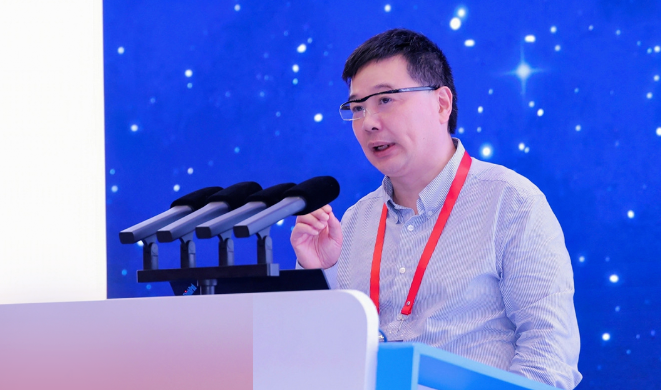
Professor Cai Hongliu
The First Affiliated Hospital of Zhejiang University School of Medicine
Early detection, warning, and prediction are key to achieving precise diagnosis and treatment of critically ill patients and improving their prognosis. The First Affiliated Hospital of Zhejiang University School of Medicine (hereinafter referred to as "The First Affiliated Hospital of Zhejiang University") has taken digital and intelligent transformation as the core and developed an innovative path from IoT platform construction, remote collaboration, integrated medical-nursing platforms, high-quality research databases, research feedback to AI-assisted decision-making.
"We have gone through four stages of evolution," Professor Cai Hongliu elaborated in his speech "Large Language Model-Based Early Detection System for Disease Deterioration." "The first stage is equipment IoT, realizing real-time collection and system integration of bedside vital sign data; the second stage is based on remote interconnection, promoting the flow of holographic patient data and the sinking of high-quality resources; the third stage is the construction of a high-quality, high-precision clinical research database, forming a 'clinical-research integration' Mobius loop in critical care; the fourth stage is the application of medical AI technology, using large language models for early detection of disease deterioration to achieve earlier intervention and change the traditional 'after-the-fact remedy' treatment model."
Through the digital and intelligent connection of "Device + IT + AI," The First Affiliated Hospital of Zhejiang University has gradually built a closed-loop system from data interconnection to comprehensive early deterioration detection. It assists doctors in breaking away from tedious documentation work, accurately identifying every key node of condition changes, compensating for staffing shortages, extending medical wisdom, and enabling patients to receive earlier, more accurate, and better critical care.
Amid the digital and intelligent wave, critical care medicine is undergoing profound changes driven by data and AI. Whether it is the EIA early detection system based on high-precision vital signs or the disease deterioration early detection system integrated with large language models, they are gradually becoming indispensable 24/7 medical assistants for doctors—helping clinicians more accurately identify risk factors, take intervention measures earlier, and better improve patient outcomes.
These innovative explorations outline a new picture of digital and intelligent integration in critical care medicine: healthcare is returning to its essence—interpreting the temperature and depth of critical care medicine with respect for life, insight into illness, and care for patients, so that everyone becomes the protagonist of life.
On this promising path of digital and intelligent development in critical care, Mindray will continue to walk side by side with critical care medical staff, actively embrace AI and big data, promote the development and application of digital and intelligent technologies and solutions in clinical practice, continuously advance personalized medicine and the overall level of treatment, and help critical care medicine move towards a more efficient, humanistic, and intelligent future.