Wandering through Regensburg, the Gothic dome of St. Peter’s Cathedral still speaks to the glory of this medieval city. These stone structures, underpinned by precise calculations, symbolize humanity’s relentless exploration of scale—where millimetric precision laid the foundation for the "hundred-meter miracles" of the Middle Ages.
Centuries later, on the same soil, this pursuit of excellence continues at the University Hospital Regensburg. Ultrasonic imaging technology from China has emerged as a new technological "legend," enabling local experts to visualize lesions as small as 5 millimeters. This advances ultrasound from "detecting clinically visible tumors" to an entirely new phase of "revealing microvascular abnormalities and achieving ultra-early warning."
Cutting-Edge Academic Exchange: Witnessing Breakthroughs in Ultrasound Innovation
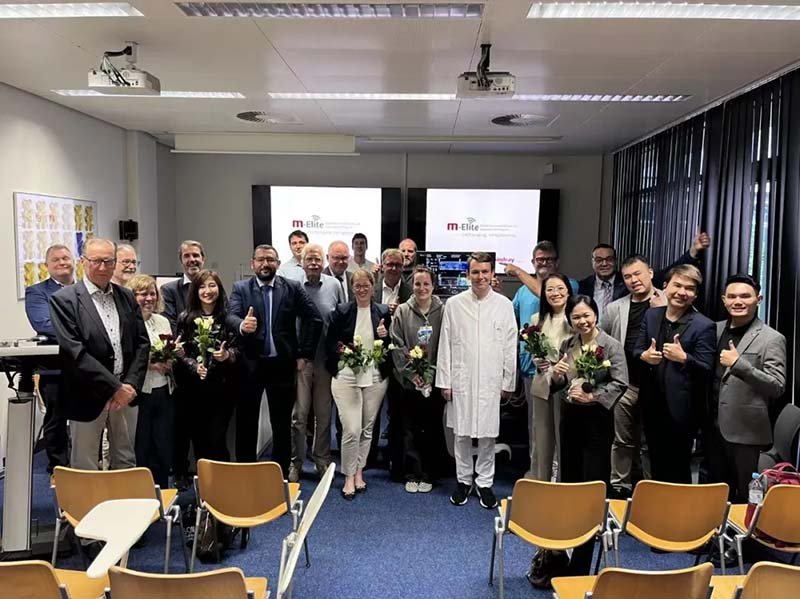
The m-Elite academic exchange event, hosted at the University Hospital Regensburg, brought together ultrasound experts from Germany, Thailand, and other countries. They collaborated to explore the clinical application of new technologies and experienced the innovative capabilities of Resona A20 (Kunlun Series) firsthand.
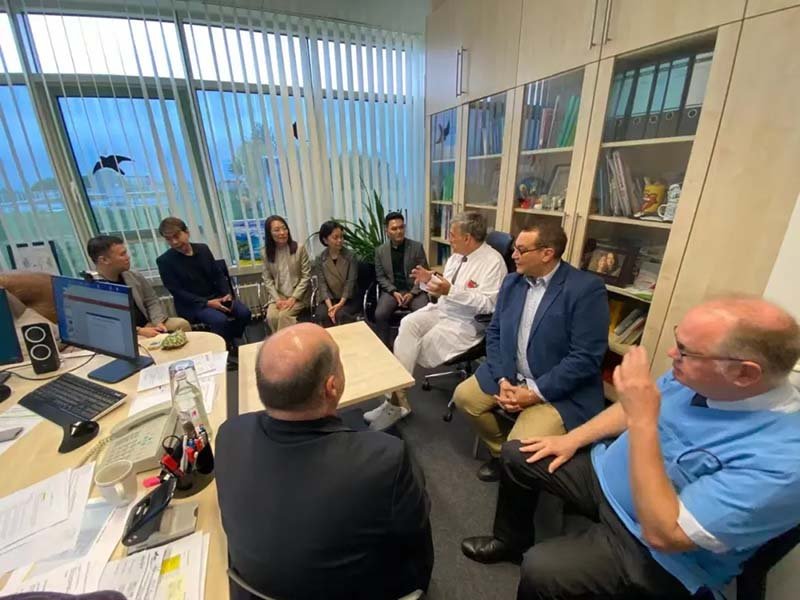
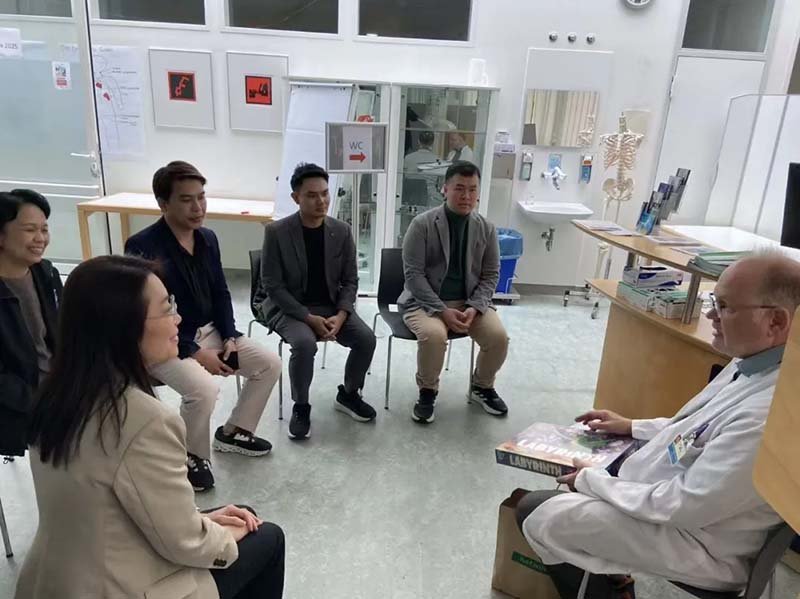
During the event, Professor Stroszczynski, Director of the Radiology Department, emphasized while leading Thai experts on a department tour: "The HD Scope of Resona A20 offers exceptional precision and image processing speed. We are considering integrating it into our six-year medical education curriculum, even including precise lesion identification as an exam component." He also endorsed the handheld ultrasound device TE Air, stating: "We hope every student can have one to support direct patient care."
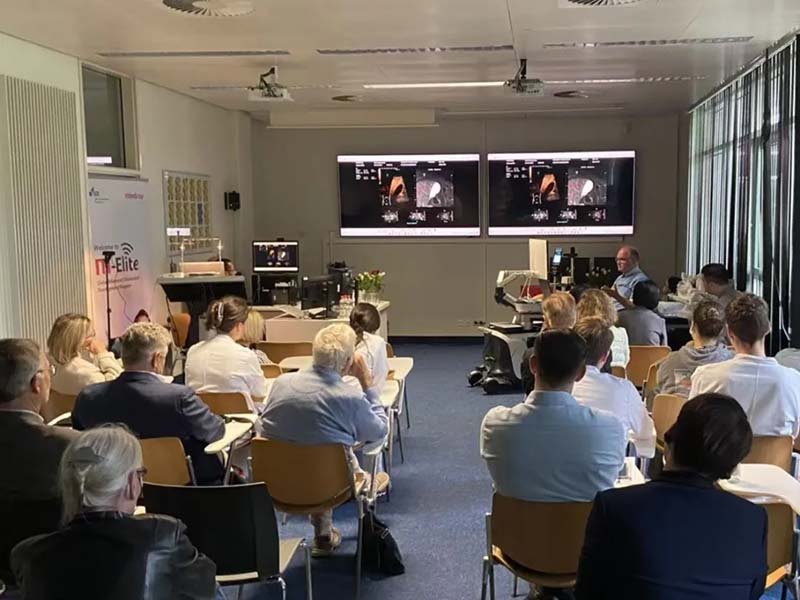
The m-Elite event featured numerous insightful academic presentations, with the live contrast-enhanced ultrasound (CEUS) demonstration co-conducted by Professor Jung and Dr. Becker stealing the spotlight. Using Resona A20, the team performed CEUS and fused the images with MRI scans, showcasing the technology’s ability to deliver ultra-high-definition contrast imaging with rapid 4-5 second response times and accurate lesion capture. The demonstration was live-streamed globally via the RayInsight Ecosystem’s remote ultrasound system.
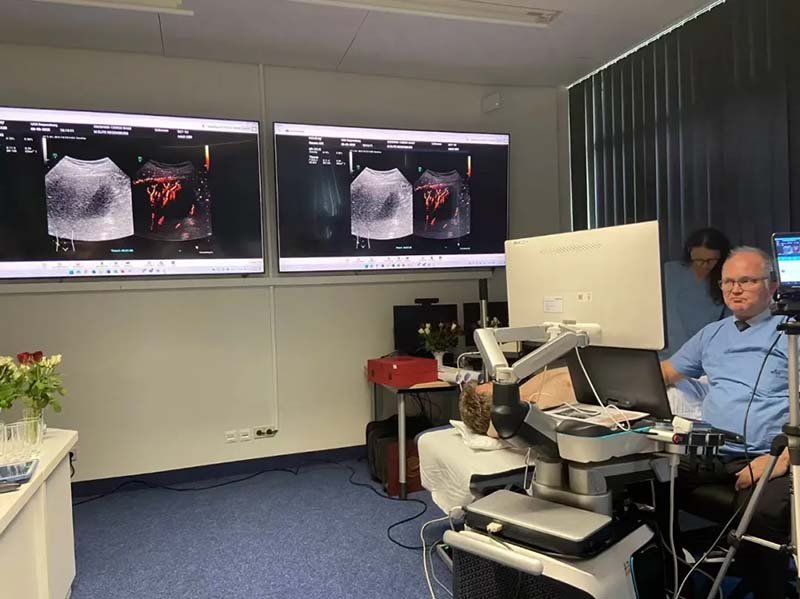
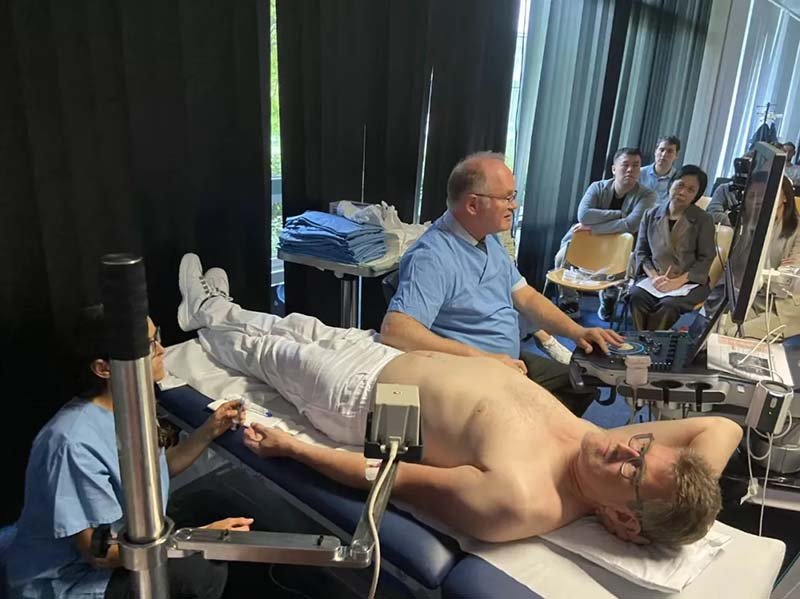
Professor Clevert from the University Hospital Munich shared his research on High-Frame-Rate Contrast-Enhanced Ultrasound (HiFR CEUS): "HiFR CEUS allows doctors to easily visualize blood vessels and microbubbles, eliminating the need for interventional procedures in many cases. In our experience, the image quality of this ultrasound system is exceptional—even superior to CT or PET-CT."
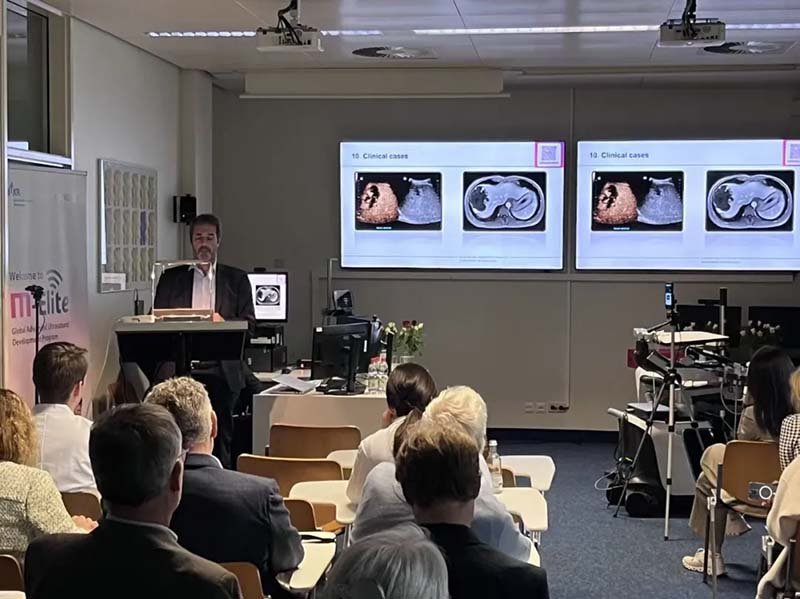
Dr. Blank from the University Hospital Halle and Dr. Wüstner from the University Hospital Trier discussed recent advancements in abdominal ultrasound and renal microvascular imaging, as well as cutting-edge experiences in interventional ultrasound and clinical education, respectively.
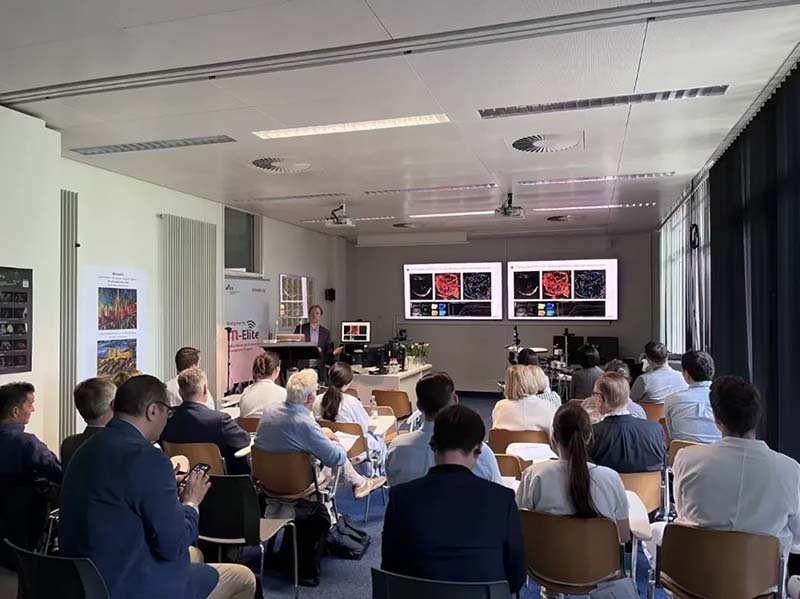
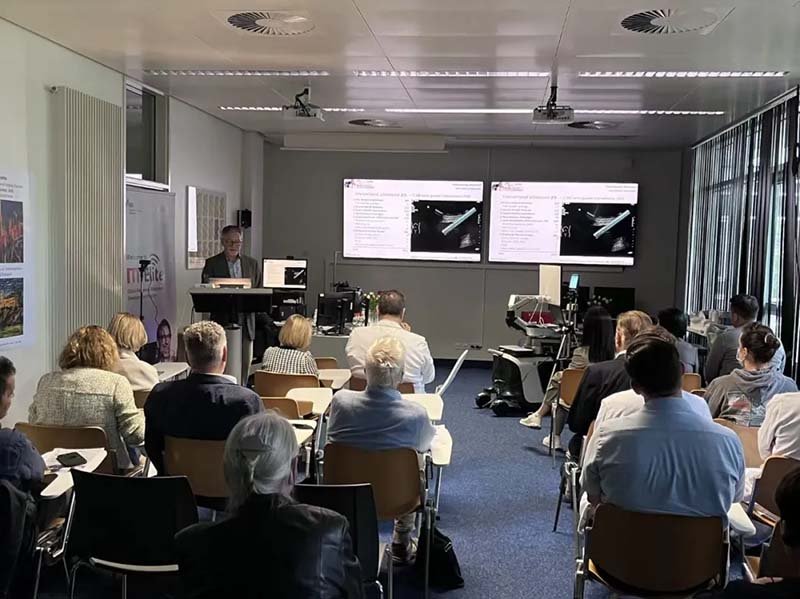
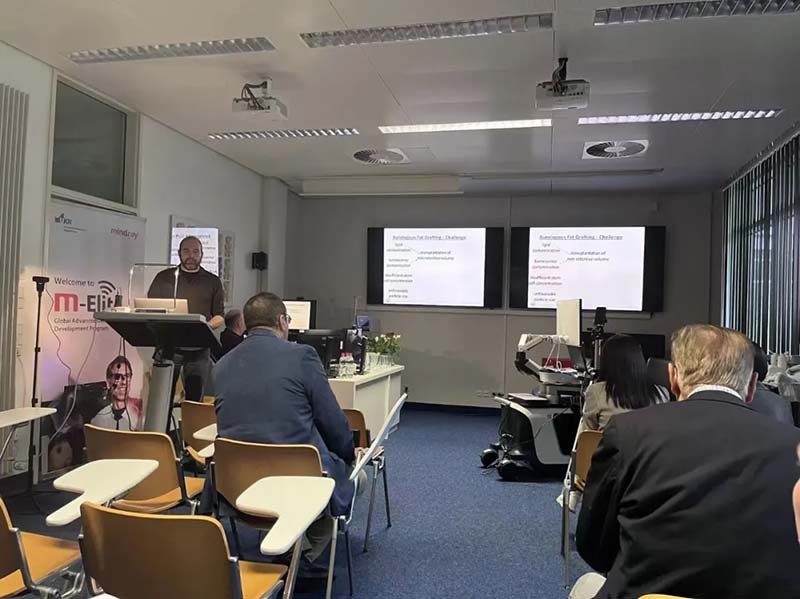
The interdisciplinary research team led by Professor L. Pantl also drew significant attention. They presented the application of ultrasound elastography and rheology in adipose tissue research, sparking lively discussions among on-site experts.
A New Era in Ultrasonic Medicine: The 5-Millimeter Breakthrough
"Today, using Resona A20’s micro-contrast imaging technology, we can detect liver tumors smaller than 5 millimeters," stated Professor Jung, Director of the Ultrasonic Medicine Center at the University Hospital Regensburg— a remark that resonated deeply at the m-Elite event.
If Gothic domes represent humanity’s quest to push the limits of architectural height with stone, the 5-millimeter microcosmic perspective embodies our pursuit to explore the intricacies of life through technology.
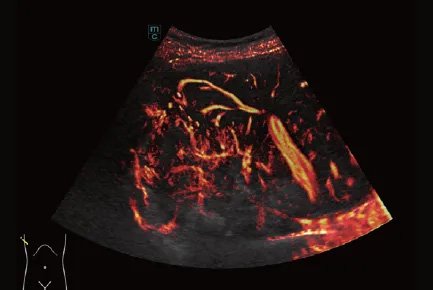
Leading this breakthrough is the aforementioned Professor Dr. Ernst Michael Jung, Director of the Ultrasonic Center at the University Hospital Regensburg and a renowned expert from the European Federation of Societies for Ultrasound in Medicine and Biology (EFSUMB). With nearly 30 years of profound experience in interventional ultrasound and contrast agent applications, Professor Jung is also a key driver of the clinical application of multimodal image fusion (e.g., ultrasound-CT/MRI fusion) at the hospital.
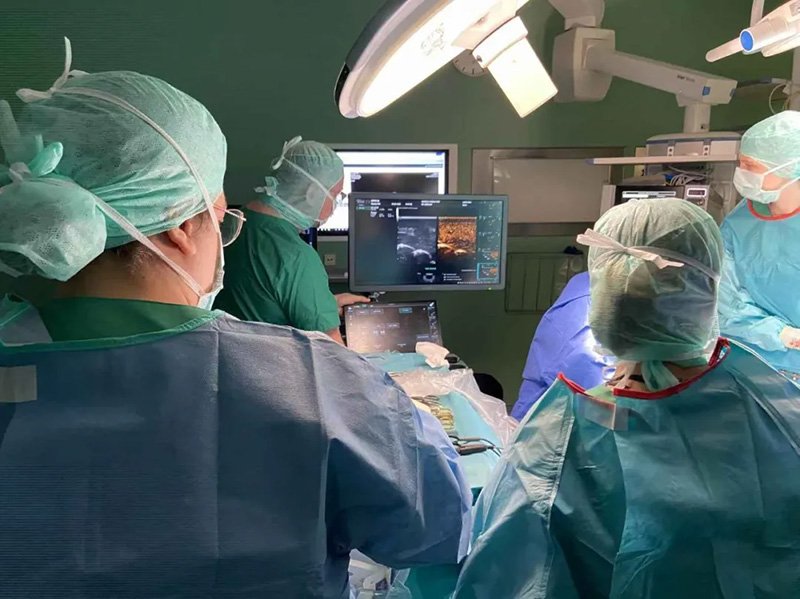
Professor Jung noted during the event: "Five millimeters is not an endpoint, but a new starting point. This technology is redefining the meaning of ‘too late,’ empowering us to gain an advantage in the ultra-early stages of disease progression." As ultrasonic imaging technology continues to evolve, such "5-millimeter miracles" may only be the beginning.
Shortly before the event concluded, Professor Jung showcased a painting of Regensburg’s Stone Bridge, which connects the two banks of the Danube River. He commented: "New technologies are like bridges, linking medical ideals with clinical reality."